Virginia USDA Hardiness Zones: Looking Up Your Zone by ZIP
A ZIP code is a useful starting point for finding a Virginia garden’s hardiness zone, but it may not tell the whole story. The zone helps you choose plants that can withstand local winter cold; it does not set your planting dates or predict every cold snap. Here’s how to use the map, check your location and apply the result without treating it as a complete gardening calendar.
How to look up a Virginia hardiness zone
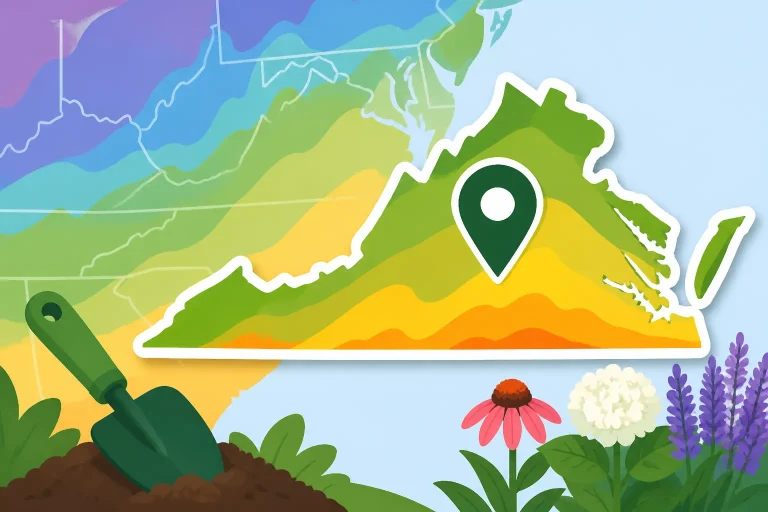
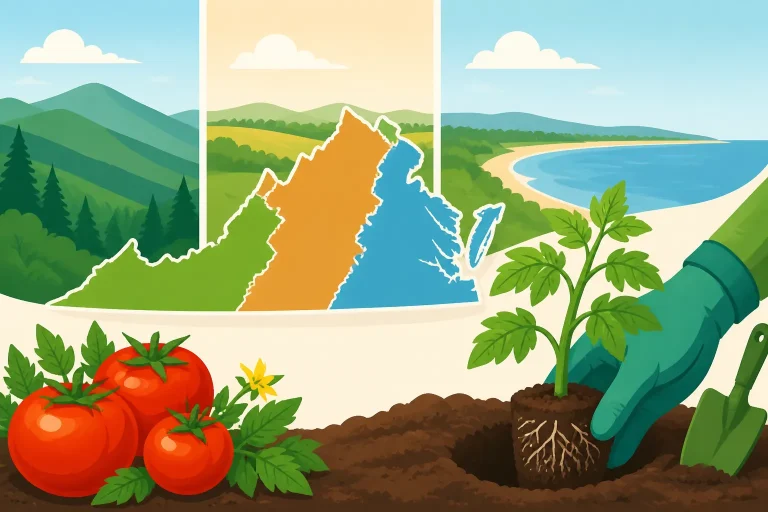
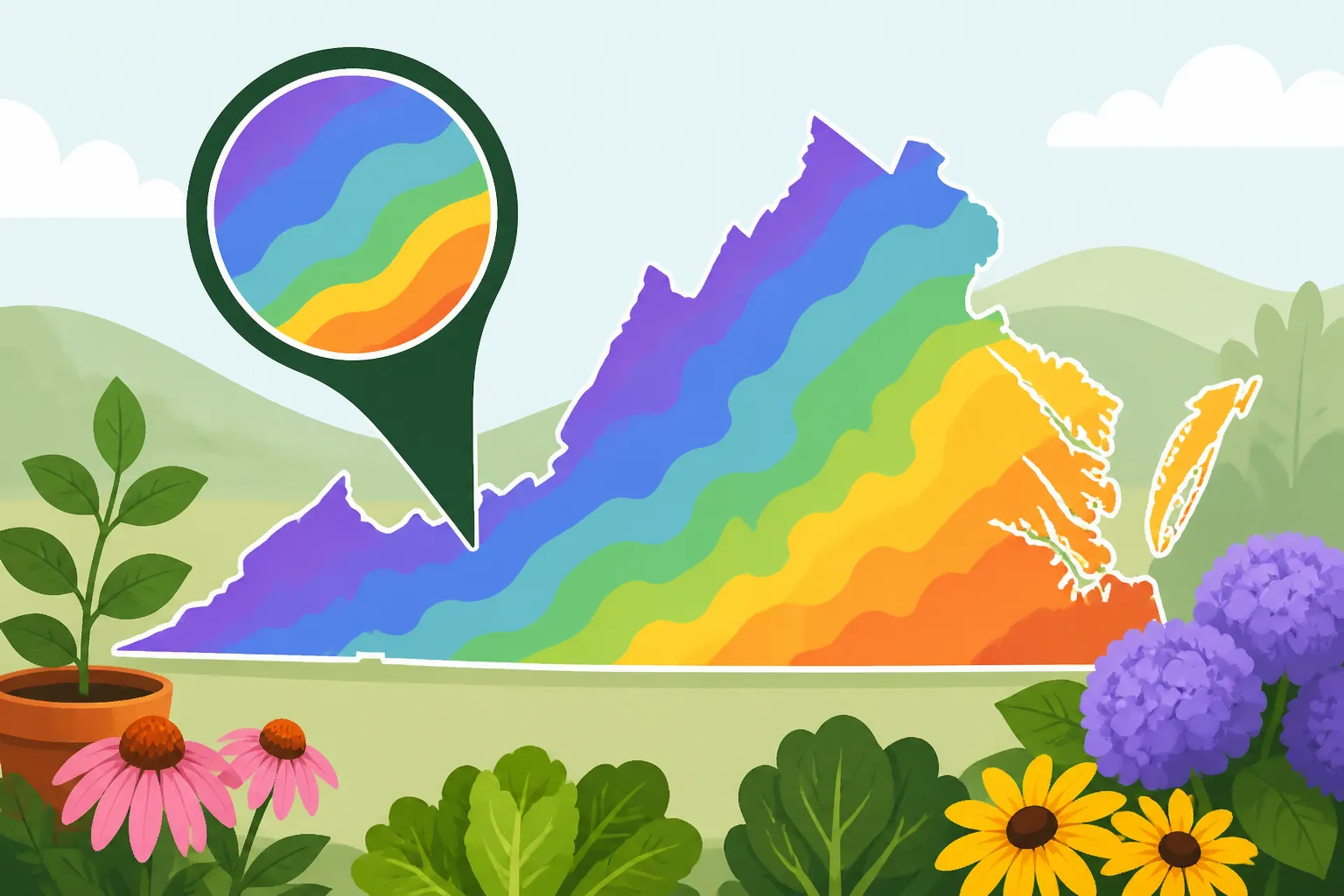
According to Virginia Cooperative Extension, use the 2023 USDA Plant Hardiness Zone Map: Virginia to identify your hardiness zone. Virginia Cooperative Extension also directs gardeners to use the 2023 USDA Plant Hardiness Zone Map to identify their hardiness zone.
If you’re searching by ZIP code, treat it as a way to orient yourself, not as a guarantee that every garden within the ZIP code has identical conditions. Use the map to find the area where you garden, then look closely at the location rather than relying on the ZIP code alone. If the map provides a location search, you can try your ZIP code and then check that the displayed result corresponds to your garden’s neighborhood. If it does not, use recognizable nearby places to locate the garden on the map.
The goal is to identify the map zone associated with the garden’s location, not to calculate a zone from a general impression of Virginia’s climate. Regions can differ, and nearby sites may also experience different growing conditions. A map result gives you a consistent starting point for comparing plants and guidance, while the actual yard adds local details the map cannot capture.
A careful lookup can follow this simple sequence:
- Find the location of the garden on the Virginia map, using the ZIP code as a locator if helpful.
- Check that you have identified the map area where the garden itself sits, rather than a distant point elsewhere in the ZIP code.
- Note the zone shown for that location.
- Use that zone to screen plants for winter hardiness, then check separate guidance for planting dates, frost risk and growing conditions.
If you are unsure whether you have located the correct area, compare the map with a more detailed local view and ask a knowledgeable local gardening resource for help interpreting it. For a more detailed walkthrough of finding a zone on the map, see How to Find Your Virginia Planting Zone on the USDA Map. If your main question is how a ZIP code fits into a planting window rather than how it fits into a zone, How to Find Your Garden Planting Window by ZIP Code addresses that separate task.
Why the exact garden location matters
A ZIP code is designed to identify a delivery area, not to describe every small climate difference within it. A large or geographically varied ZIP code may include sites with different elevations, slopes, exposure or proximity to built-up areas and bodies of water. Even when the map assigns an area a zone, the conditions in one yard may not match those in another yard nearby.
That is why it helps to check the garden’s location at the most useful level of detail available on the map. If the ZIP code search lands near a boundary, or the garden sits near a change in terrain, do not assume the first result settles the question. Compare the nearby map shading and consider the character of the garden site. The zone is still useful; the point is to avoid treating a broad location label as a precise description of every bed.
What the hardiness zone tells you
A hardiness zone is a way to assess whether a perennial plant is likely to tolerate the coldest winter conditions typical of a location. It is particularly useful when comparing shrubs, trees and perennial plants that remain in the ground through winter. A plant’s listed hardiness range can help you decide whether it is a reasonable candidate for your site.
The map does not tell you whether a plant will thrive in every respect. A plant may tolerate winter cold but still struggle in a yard with unsuitable sunlight, wet soil, drought, wind exposure or other conditions. Hardiness is one part of matching a plant to a place, not a promise that the plant will flourish or survive every unusual weather event.
| Gardening question | What the hardiness zone can help with | What to check separately |
|---|---|---|
| Can a perennial or shrub tolerate local winter cold? | Use the zone to compare the site with a plant’s listed hardiness range. | Confirm the plant’s needs for sun, moisture, soil and exposure. |
| When should vegetables be planted outside? | The zone can provide broad climate context. | Use crop-specific planting guidance and local frost information. |
| Is a site protected from a late cold snap? | The zone offers a general indication of winter cold suitability. | Consider the forecast, local frost patterns and protection options. |
| Will the same plant perform the same way across a yard? | The zone gives a common reference for the broader area. | Look at shade, slope, drainage, wind and other yard-level differences. |
For a more direct comparison of hardiness and planting timing, see Virginia Vegetable Planting Windows by Hardiness Zone. The key distinction is that a zone describes winter cold suitability; it is not a date on the calendar. A vegetable may be suitable for the area in general while still being vulnerable to cold if planted outdoors too early.
Hardiness does not mean frost-free
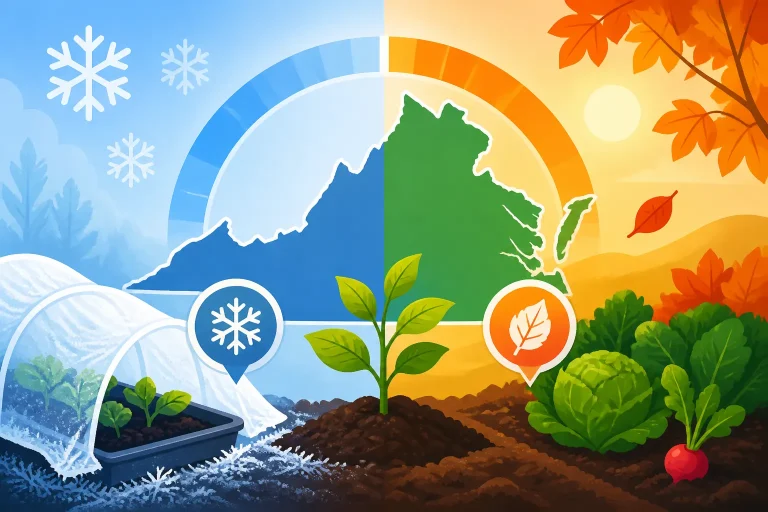
A zone lookup cannot tell you when a specific garden will be safe from a spring frost. Nor does it show the exact day an autumn frost will arrive. Those questions concern seasonal frost and freeze probabilities, which are different from a hardiness-zone classification.
This matters most for tender annual crops and young transplants. A tomato, pepper or other warm-season crop may be well suited to the broader region but still be damaged by chilly weather after planting. Use a frost and freeze resource alongside the zone lookup, and pay attention to current conditions rather than assuming the zone guarantees warmth. Understanding Spring and Fall Freeze Probabilities for Planting explains why frost dates are probabilities, not fixed promises.
What a ZIP-code lookup cannot tell you
A successful lookup gives you a useful regional reference, but it cannot describe every growing condition in your yard. A garden’s exposure and physical setting can make it warmer, colder, wetter or drier than another location nearby. These differences may affect plant performance even when two gardeners use the same mapped zone.
It is not a planting calendar
The most common mistake is to use a hardiness zone as a direct answer to “When can I plant?” A zone does not tell you when the soil is ready for sowing, when a particular crop should go outside or how long a crop needs to mature before autumn cold. Those decisions depend on the crop and the season as well as the location.
Vegetable planting calendars may organize recommendations by region, crop type or frost timing. Use a resource that addresses the crop you plan to grow rather than translating the zone into an assumed planting date. Virginia Vegetable Planting Calendar by Region can help connect regional conditions with vegetable timing, while Virginia Frost and Freeze Date Guide for Gardeners focuses on the separate question of seasonal cold.
It is not a complete description of a yard
The map is useful for broad comparison, but it cannot account for every feature around an individual planting. A sheltered bed beside a building may behave differently from an exposed bed on an open slope. Shade, drainage, wind and the surrounding landscape can also influence how a plant grows.
These differences are often called microclimates. They do not replace the map zone; they help explain why one garden may perform differently from another that has the same zone result. If your yard has a steep slope, a low spot that collects cold air or a sheltered urban setting, keep those features in mind when choosing plants and setting expectations. For more on local variation, see Microclimates and Growing Windows Across Northern Virginia.
It is not a guarantee against unusual weather
A zone describes typical winter cold conditions used for plant hardiness comparisons. It does not promise that a plant will never experience colder weather, nor does it predict the weather in a particular season. A plant suited to the zone can still be affected by an unusual cold spell, especially if it is young, stressed or growing in an exposed spot.
For long-lived plants, the zone is a helpful first screening tool, but consider the plant’s tolerance and the site’s exposure together. If a plant is near the edge of its listed hardiness range, a protected location may matter. A severe event can also cause damage beyond what a typical-year description would lead you to expect, so a zone should guide choices rather than guarantee outcomes.
How to use your zone in a Virginia garden plan
Once you have identified the zone for your garden, use it as one layer of a practical decision. Start with the kind of plant you want to grow. For a tree, shrub or perennial, compare its stated hardiness range with your location. For vegetables and other seasonal crops, use the zone as context, then rely on crop-specific planting guidance and frost information to decide when to sow or transplant.
A useful planning routine looks like this:
- For trees, shrubs and perennials: Check whether the plant is considered suitable for the mapped zone, then confirm its preferred light, soil moisture, drainage and site exposure. Using USDA Hardiness Zones to Pick Virginia Perennials and Shrubs offers more detail on using zones when selecting long-lived landscape plants.
- For vegetables: Identify the crop and whether it is cool-season or warm-season. Consult regional timing guidance rather than assuming the zone itself supplies planting dates. Soil conditions, frost risk and the crop’s cold tolerance all matter.
- For a garden near a map boundary: Treat the displayed zone as a guide, not a precise forecast. Compare nearby areas, note the site’s terrain and use a conservative choice when a plant is marginal for the location.
- For a yard with unusual exposure: Keep a simple record of which beds warm early, stay damp, get strong wind or experience frost later. That local observation can help explain results that do not match a broad map-based expectation.
- For an uncertain plant choice: Compare the plant’s listed hardiness range with the map, then seek local gardening advice if the plant is marginal or especially valuable to you.
Pair the zone with the right kind of guidance
Different gardening questions need different information. If you are choosing a landscape plant that stays outdoors through winter, hardiness is central. If you are deciding when to sow lettuce or transplant a warm-season vegetable, look for a crop calendar. If a cold night is forecast, check the forecast and consider whether protection is appropriate. A single zone lookup cannot answer all three questions.
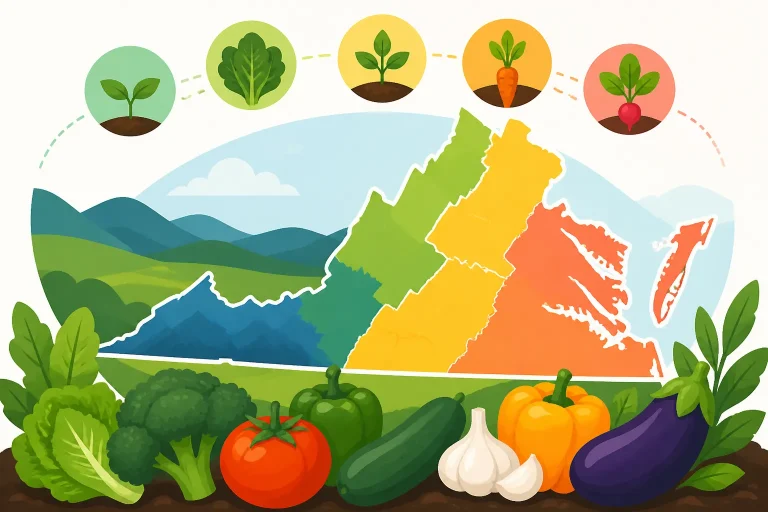
This is especially important for vegetable gardeners who plan a sequence of crops. A season may include early cool-season sowing, warm-season planting after cold risk eases and another round of crops for autumn. The zone helps describe the broader setting, but it does not establish each crop’s sowing window. For timing across the seasons, see Virginia Three-Season Crop Calendar: Spring Through Fall.
A useful mental model is to give each resource a specific job:
- Use the hardiness map to compare plants with typical winter cold.
- Use a regional planting calendar to plan sowing and transplanting.
- Use frost and freeze guidance to understand seasonal cold risk.
- Use observations from your yard to account for local conditions that a broad map cannot show.
That approach keeps the zone valuable without asking it to answer questions it was not designed to answer.
What to record after your lookup
Write down the zone you found and the location you used to find it. If you garden in more than one place, record each site separately rather than assuming one result applies to all of them. A container on a sheltered patio, a raised bed in an open yard and a planting area at a different elevation may not experience the same conditions.
It is also useful to note the plant or crop question that prompted the lookup. For instance, the right next step differs if you are selecting a shrub, planning vegetable transplants or trying to understand winter damage. Recording the question alongside the zone makes it easier to find the right follow-up information and reduces the temptation to treat the map as a complete calendar.
If your garden results repeatedly differ from expectations, note the conditions around the affected bed. Was it exposed to wind? Did cold air settle there? Does the soil drain slowly? Did the plant receive the sunlight it needs? These observations can help distinguish a hardiness mismatch from a site or care issue. The zone is a valuable reference point, but diagnosis still depends on the plant and the place where it is growing.
Frequently Asked Questions
Can one ZIP code contain more than one hardiness zone?
It can be unwise to assume a ZIP code represents one uniform garden climate. Use the map to check the location of the garden itself, especially if the area includes varied terrain or lies near a zone boundary.
Does my hardiness zone tell me when to plant vegetables?
No. A zone helps with assessing winter hardiness, while vegetable planting dates depend on the crop, the season and local frost risk. Use a regional calendar and frost guidance for timing.
Can a plant in my zone still be damaged by winter weather?
Yes. A zone is a guide to typical winter cold, not a guarantee that every plant will survive every cold event. Exposure, plant condition and unusual weather can all affect the outcome.
Should I use the same zone for every garden bed?
Use the map as a reference for each garden location, but also account for site differences. A sheltered or exposed bed may have different growing conditions even when it is in the same general area.
Disclaimer
This article is for general informational purposes only and does not constitute professional advice. Laws, prices and regulations vary by location and change over time. Consult a qualified professional for guidance on your specific situation. Virginia Gardening Guide is not a government agency and is not affiliated with any university extension, state department of agriculture or other government agency.