When to Plant Tomatoes in Virginia by Region and Elevation
Tomato timing in Virginia is not one statewide date. A gardener near the coast may be ready to plant while a higher-elevation garden still faces cold nights. The reliable approach is to combine your local frost outlook with soil warmth, elevation, and the condition of your seedlings. Here’s how to choose a planting window that gives tomatoes a stronger start.
The right planting signal is more than a calendar date
Tomatoes are warm-season plants. A late frost can damage or kill young plants, and chilly soil and nights can stall growth even after the danger of a hard freeze has eased. That makes the best planting date a local decision, not a date that works for every Virginia garden.
Use three checks together:
- Spring frost risk: Look up the expected last spring freeze or frost for a nearby weather station. These dates are probabilities, not guarantees; weather varies from year to year. A date with a lower chance of frost is a more conservative guide than one with a higher chance.
- Soil warmth: Check the soil where the roots will grow, not just the afternoon air temperature. Tomatoes establish more readily in warm soil. If the bed is still cold and wet, waiting can be better than putting transplants in on the first mild day.
- Nighttime temperatures: A run of cold nights can set back recently planted tomatoes. Pay attention to the forecast for the days immediately after planting, as well as the general seasonal outlook.
Frost dates are useful for planning, but they are not planting appointments. A warm week may arrive early and be followed by a cold snap. Conversely, a cautious planting date may pass with no frost at all. The practical target is a stretch of settled, mild weather after the local frost risk has become acceptably low and the soil has warmed.
For a quick overview of how to use regional frost probabilities, see Understanding Spring and Fall Freeze Probabilities for Planting. To locate useful station information, Looking Up Spring and Fall Freeze Dates for Virginia Stations explains what to look for. Use the station nearest your garden with similar elevation and exposure; a distant station can give a misleading impression.
Hardiness zones are not a substitute for spring frost timing. They describe average winter cold conditions, which can help with choosing perennial plants, but they do not tell you whether your tomato seedlings are safe from a late spring freeze. When the planting decision is about tomatoes, local frost history, current weather, soil conditions, and the forecast matter more.
What counts as “ready”?
A transplant is better prepared for a garden bed when it is healthy, sturdy, and acclimated to outdoor conditions. A small, soft plant moved directly from a warm indoor space into bright sun and wind can struggle even when the calendar seems favorable.
Before setting plants out, harden them off gradually. Increase their outdoor exposure over several days, protecting them from harsh sun, strong wind, and cold nights during the transition. A fuller process is covered in Hardening Off Vegetable Seedlings for Virginia Garden Beds.
Do not let an indoor seed-starting schedule force an outdoor planting date. If the garden is still cold, seedlings can remain in suitable containers for a little longer, provided they have enough light and are not becoming badly crowded or root-bound. For seed-starting timing, see Starting Tomato Seeds Indoors: Week-by-Week Timing Across Virginia.
How region and elevation shift Virginia tomato timing
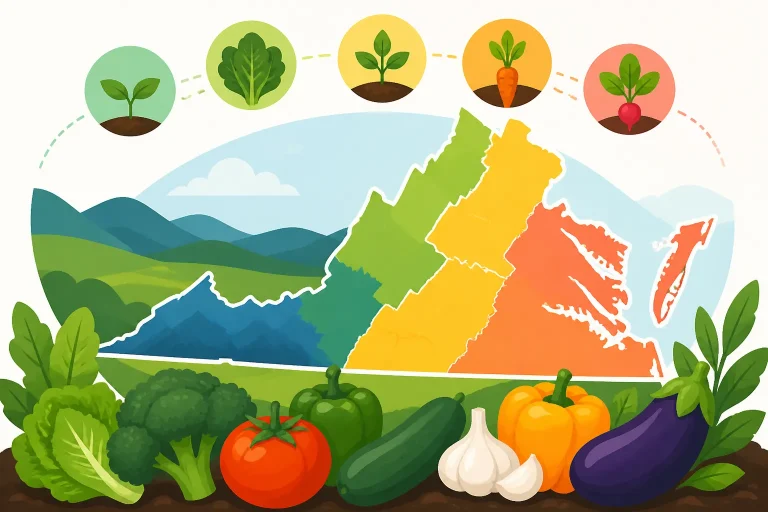
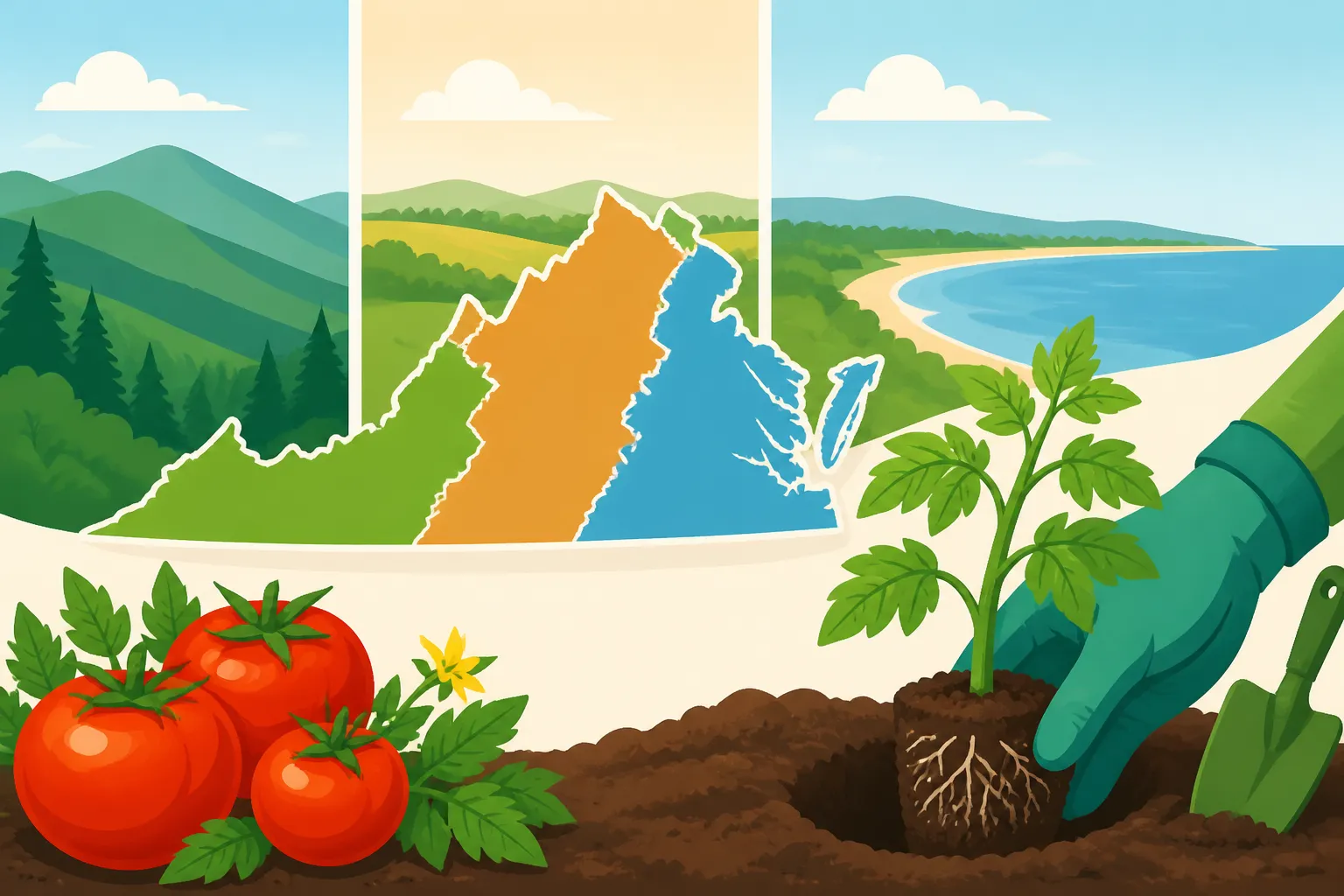
Virginia’s landscapes include a mild coastal plain, the Piedmont, and mountainous areas with substantial variation in elevation and exposure. These broad regions help frame the decision, but they do not create a single planting date within each region. A sheltered urban yard, a low-lying hollow, and a breezy slope can experience different conditions even when they are nearby.
The table below gives a way to compare conditions. Treat the regional descriptions as a starting point and confirm the planting window with local frost information and actual garden conditions.
| Virginia setting | General spring pattern | What to check before planting |
|---|---|---|
| Tidewater and warmer coastal areas | Spring often progresses earlier than in inland and higher-elevation locations | Cold snaps after a warm spell, soil temperature, and the garden’s exposure to wind |
| Piedmont | Often intermediate, with noticeable differences among valleys, slopes, and urban areas | Nearby station frost probabilities, nighttime lows, and whether the bed has warmed |
| Shenandoah Valley and mountain areas | Later and more variable conditions are common, especially at higher elevations and in cold-air pockets | Elevation, valley location, local frost records, and forecast lows |
| Urban and sheltered sites | Buildings and paved areas may create warmer pockets, but warmth can be uneven | The actual bed temperature and whether the site is protected without being overly shaded |
| Exposed or low-lying sites in any region | Cold air, wind, or poor drainage may delay safe planting | Cold-air pooling, damp soil, exposure, and the forecast after planting |
Coastal Plain and Tidewater
Gardeners in the Tidewater and warmer parts of the Coastal Plain may be ready earlier than gardeners inland or at higher elevations. That does not mean every coastal bed is safe as soon as daytime temperatures feel comfortable. A cool stretch, an exposed site, or cold soil can still slow establishment.
A warm coastal yard may also have a long growing period, but there is little benefit to planting too early if cold conditions leave seedlings stalled. Choose a sheltered, sunny site and watch the forecast for cold nights. The regional overview in Tidewater Planting Calendar: Making the Most of an Earlier Spring can help put tomatoes in context with other crops.
Piedmont
The Piedmont’s rolling terrain creates meaningful local differences. A south-facing slope that warms quickly may be ready before a shaded garden or a low spot where cold air settles. Urban neighborhoods can also warm at a different pace from nearby open areas.
Rather than relying on a countywide date, compare your garden with a nearby station and observe how the site behaves. If the bed is slow to dry and remains chilly in the morning, it may not be ready just because a nearby sunny yard has already been planted. For a regional view, consult Piedmont Virginia Planting Calendar: Spring to Fall Windows.
Shenandoah Valley and mountain gardens
Higher elevation generally brings a shorter and less predictable warm-season window. In mountain valleys, cold air can collect in low areas, while slopes may warm differently. A garden in a sheltered valley may not match a garden on an exposed hillside, even at a similar elevation.
For these sites, prioritize the closest reliable frost information and the actual forecast over broad regional averages. If planting later means a shorter harvest period, choose a variety whose expected maturity fits the remaining season, but do not trade away safe establishment for a few extra early days. Planting in Western Virginia Mountains to Avoid Late Freezes and Sowing Vegetables in Mountain Valleys After Final Frosts offer additional regional timing context.
A practical process for choosing your planting window
Use this process each spring rather than trying to memorize one date.
- Identify the closest useful weather station. Choose one that reflects your general region and, as much as possible, your elevation. A station far away or at a very different elevation may not represent your yard.
- Review the station’s spring frost probabilities. Remember that each probability describes the likelihood of frost by a particular point in the season; it does not promise that frost will not occur afterward. If you prefer lower risk, use a more conservative probability as your planning reference.
- Compare your garden with the station. Consider whether your bed is in a cold hollow, on a slope, near a wall, in an urban area, or exposed to wind. These features can shift conditions locally.
- Check the soil, not only the air. Use a soil thermometer if available. Check the root zone in the morning, when the soil has not been warmed by the day’s sun. Cold, wet soil is a reason to wait.
- Watch the short-range forecast. A string of mild days is more reassuring than one warm afternoon. Postpone planting if a cold snap or frost is forecast.
- Prepare transplants for outdoor conditions. Harden seedlings off gradually so that sun, wind, and outdoor temperature changes are not a shock.
- Plant into a suitable bed. Tomatoes need good light, soil that drains adequately, and enough room for air movement and mature growth. Avoid working soil when it is saturated; compacting wet soil can make later root growth harder.
- Keep a simple record. Note the planting date, soil condition, location, and whether the plants grew steadily or stalled. That record can help refine your timing next spring.
A useful decision is often “wait a few days and reassess,” rather than “plant today or lose the season.” Tomatoes can recover from a short delay in planting more easily than from severe cold injury. If a mild stretch arrives early, keep the plants healthy and ready, but let the garden conditions make the final call.
Why soil temperature matters
Air temperature changes quickly. Soil warms more slowly, particularly in shaded, wet, or heavily compacted beds. A transplant placed into cold ground may sit without much new growth, even if the afternoons are pleasant. During that pause, seedlings are more vulnerable to weather swings and other stress.
If you are uncertain, take several readings around the bed rather than measuring in one sunlit spot. A dark, dry surface can feel warm while the soil below remains cool. Raised beds may warm faster than in-ground beds, but they can also lose heat quickly overnight. The bed’s construction is one factor, not a guarantee.
Avoid planting immediately after turning very wet soil. If it smears or clumps heavily when handled, give it time to drain and become workable. A well-prepared, warm bed is a better start than a rushed planting into cold mud. Avoiding Cold Mud: When Virginia Soils Are Warm Enough to Sow explains why workable soil matters for planting decisions.
Earlier or later planting: choosing a sensible trade-off
Planting early can give tomatoes more time to grow and produce, but only when the weather supports steady establishment. Early planting in cold soil can lead to slow growth, leaf damage, and the need for emergency protection. Planting later may shorten the time available before autumn cooling, particularly in higher-elevation gardens, but a healthy transplant in warm conditions often catches up faster than one that has been chilled.
The best choice depends on how much risk you are willing to accept and what you want from the garden.
If you want the earliest possible harvest
Use a conservative, local frost outlook and focus on the warmest appropriate site in the garden. A sunny bed sheltered from strong wind may help, but avoid placing tomatoes where shade from trees or buildings limits their light. Prepare covers in advance if you plan to use them, and know how to secure them without crushing plants.
Row covers can reduce exposure to light frost under suitable conditions, but they are not a guarantee against a hard freeze. They can also trap heat on sunny days, so they need monitoring and appropriate ventilation. For practical protection limits, see Using Row Covers for Light Frost Defense and Midday Heat Screening. If a damaging freeze is forecast, postponing planting or moving containers to a protected place is safer than assuming a cover will solve every risk.
If you want dependable establishment
Wait until the local frost risk has declined, the soil has warmed, and the short-range forecast looks settled. This approach gives seedlings a better chance to begin active growth without repeated cold setbacks. It is often the sensible choice for gardeners who would rather have fewer emergency chores than chase the earliest possible tomato.
If your season is shorter
Mountain and higher-elevation gardeners may need to balance late spring conditions against autumn timing. Start seeds indoors at a suitable interval so plants are ready to transplant when outdoor conditions allow, but avoid starting so early that they become weak or crowded before the bed is ready. Choose varieties with maturity expectations that suit the available season and your harvest goals. The guide Fitting Warm-Season Crops into Shorter Mountain Growing Seasons discusses that broader trade-off.
Once plants are established, keep notes on the first harvest and how long the crop remained productive. Days-to-maturity information on seed packets is a planning aid, not a promise: growing conditions, transplant size, and weather can all affect the result.
Common timing mistakes and how to avoid them
Planting because a particular holiday has arrived
A holiday or local tradition can be an easy reminder, but it cannot account for a cold spring, elevation, or a garden’s microclimate. Treat familiar dates as prompts to check the forecast and soil—not as a guarantee that tomatoes are safe outdoors. The Mother’s Day Benchmark: Spring Frost Safety in the Piedmont explains why a familiar benchmark still needs local judgment.
Using a statewide calendar for a very local site
A regional calendar helps narrow the search, but a map or average cannot capture every slope, valley, urban block, or sheltered courtyard. Use it as a starting point, then compare it with a nearby weather station and your garden’s own conditions. How to Find Your Garden Planting Window by ZIP Code can help with the initial lookup, but ZIP-based information should not replace site observation.
Treating hardiness zone as a spring planting date
A USDA hardiness zone is based on winter low temperatures. It can be useful when choosing plants that must survive winter outdoors, but it does not tell you when the last spring frost will occur or whether soil is warm enough for tomatoes. Make the planting decision with frost probabilities and current conditions.
Planting after a single warm afternoon
A sunny day can make the garden feel ready while nights and soil remain cold. Check the trend, not just one reading. If the soil is chilly or the forecast includes a cold snap, give the bed and seedlings more time.
Starting seeds too early indoors
Oversized, crowded seedlings do not necessarily produce an earlier harvest. If transplanting must be delayed, provide strong light, suitable growing conditions, and enough space to keep plants healthy. Adjust the next seed-starting schedule to match your region and typical spring conditions rather than starting earlier by default.
Assuming covers eliminate frost risk
Protective fabric can help in some light-frost situations, but its effectiveness depends on the weather, how the cover is used, and the conditions under it. Secure covers properly and monitor plants for overheating during sunny weather. Do not treat a cover as a substitute for a good planting window.
A dependable tomato start comes from combining local frost probabilities, warm soil, a favorable forecast, and well-prepared transplants. The coast may reach that combination earlier than the Piedmont or mountain areas, but the garden itself has the final say.
Frequently Asked Questions
Can I plant tomatoes as soon as the last frost date has passed?
Not automatically. Frost dates are probabilities, and a freeze can still occur afterward. Check the short-range forecast and make sure the soil and nighttime conditions are suitable before planting.
Should I use my USDA hardiness zone to time tomatoes?
No. Hardiness zones describe average winter cold, not spring frost timing. Use nearby frost information, soil warmth, and the current forecast to decide when to plant.
Are tomatoes planted at the same time across Virginia?
No. Coastal, Piedmont, and mountain gardens can reach safe planting conditions at different times. Elevation, slope, cold-air pooling, urban warmth, and site exposure can also shift the window within a region.
What should I do if I planted early and a cold night is forecast?
Protect the plants if conditions call for it, using a suitable cover and monitoring it as temperatures change. For a more serious freeze, additional protection or postponing transplanting would have been preferable; covers do not guarantee safety in every situation.
Disclaimer
This article is for general informational purposes only and does not constitute professional advice. Laws, prices and regulations vary by location and change over time. Consult a qualified professional for guidance on your specific situation. Virginia Gardening Guide is not a government agency and is not affiliated with any university extension, state department of agriculture or other government agency.