Virginia Vegetable Planting Windows by Hardiness Zone
Virginia gardeners often look up a hardiness zone expecting it to tell them when to sow vegetables. It helps describe winter cold, but it cannot set a reliable planting date for every crop or yard. This guide shows how to use a zone as background, then plan around frost risk, soil warmth, local conditions, and each vegetable’s needs.
What a hardiness zone tells you about vegetable planting
A hardiness zone is useful context, but it is not a vegetable planting calendar. It describes the kind of winter cold a location typically experiences. That can help when choosing plants meant to live through winter, but most vegetables are planted for a particular growing season and respond to conditions the zone map does not show.
A zone does not tell you when the last spring frost will occur in your garden, when the soil will be workable, or whether a cold spell is on the way. Nor does it account for all the differences between a sheltered urban yard, a windy hillside, a low-lying garden, and a sunny bed close to a building. Those details can change how quickly a site warms in spring and how soon tender plants are exposed to cold.
That distinction matters because vegetable crops differ in what they can tolerate. Peas and some leafy greens can grow in cool conditions. Tomatoes, peppers, eggplant, beans, and many summer crops need warmer weather and soil. Planting all of them according to one zone-based date would ignore the conditions that matter most to each crop.
Use the zone to understand the broad winter climate, then use other information to make the actual planting decision:
- Seasonal frost information helps you judge the risk of a late spring freeze or an early fall freeze. Those dates are estimates with a probability, not promises that frost will arrive or end on a fixed day.
- Soil condition and temperature help you decide whether seeds are likely to germinate and whether transplants can establish.
- Crop characteristics help distinguish cool-season vegetables from crops that are sensitive to chilling.
- Local exposure and elevation help explain why two gardens in the same general area may not warm or cool at the same pace.
- The seed packet or transplant label provides crop-specific information such as days to maturity and recommended sowing conditions.
For a fuller explanation of how a zone map differs from frost timing, see How to Find Your Virginia Planting Zone on the USDA Map and Understanding Spring and Fall Freeze Probabilities for Planting. The practical takeaway is simple: a zone can help you orient your plan, but it should not be the only reason you put seeds or transplants in the ground.
How to identify your Virginia hardiness zone
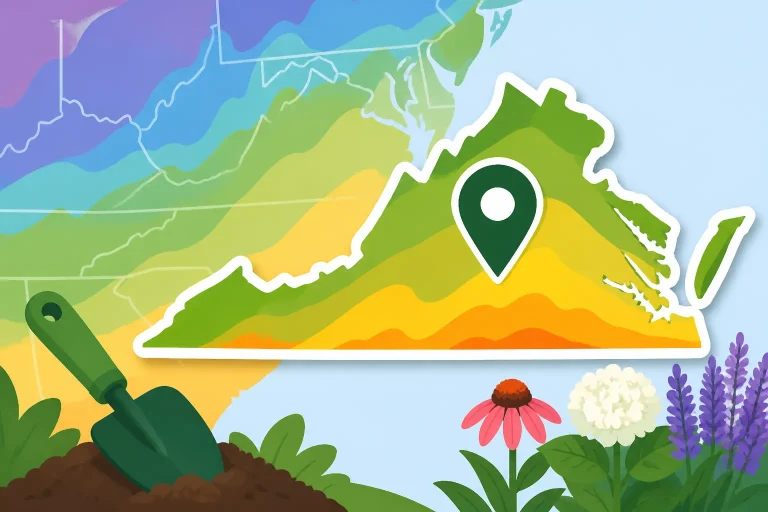
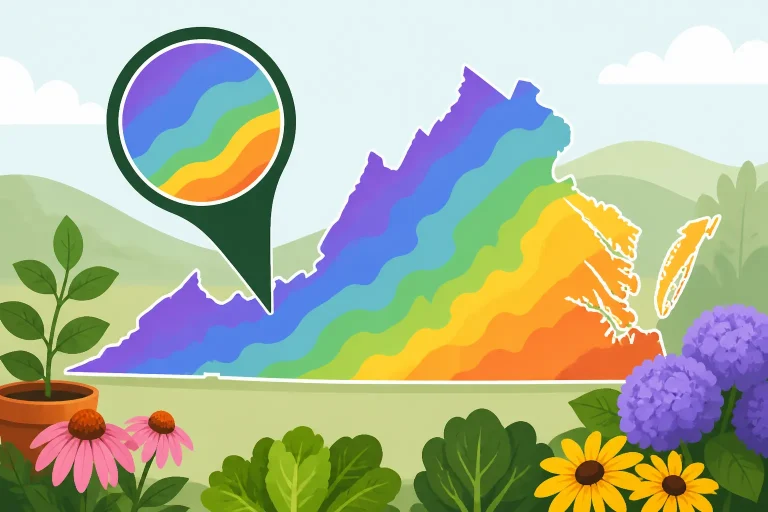
Start with the map intended for the current hardiness-zone lookup, rather than relying on a number remembered from a previous home or an older map. Virginia Cooperative Extension directs gardeners to use the 2023 USDA Plant Hardiness Zone Map to identify their hardiness zone. Use the 2023 USDA Plant Hardiness Zone Map: Virginia to identify your hardiness zone, as Virginia Cooperative Extension directs.
When looking up a location, use the map to find the area where the garden sits. A ZIP code or town name can help orient you, but it should not be treated as a precise reading for every yard within that area. Local exposure, slope, elevation, and nearby buildings can all contribute to a garden’s conditions. A map is a useful regional reference, not a guarantee for an individual bed.
If you have moved, check the map again for the new location. A zone remembered from another part of Virginia may not describe your current site. Even within one broader region, elevation and landscape can produce meaningful differences in cold exposure. The map provides a consistent starting point, while close observation of the garden fills in the local details.
Use the zone as a first filter when considering crops or varieties with a long growing season, or when deciding whether a perennial crop is likely to survive winter. For annual vegetables, it is more useful as background than as a planting instruction. A warm-season vegetable may be suitable for the area but still be damaged by a late cold snap if planted outside too early. A cool-season crop may be ready to sow while the weather is still too unsettled for warm-season plants.
To connect zone information to planting windows, pair the map with regional and crop-specific calendars. Virginia Vegetable Planting Calendar by Region helps frame the broad differences among Virginia’s growing areas, while Virginia Frost and Freeze Date Guide for Gardeners explains why frost information is part of the decision rather than a fixed schedule.
Turn the zone into a crop-by-crop planting plan
A useful planting plan starts by sorting vegetables according to the conditions they need. The categories below are not exact schedules; they are a way to decide what information to check next. Your seed packet, transplant tag, local frost guidance, and actual garden conditions still matter.
| Crop group | What the group generally needs | What to check before planting |
|---|---|---|
| Cool-season direct-sown crops | Cool conditions for early growth and establishment | Whether the soil is workable, whether it is excessively wet, and whether the crop can tolerate the expected weather |
| Cool-season transplants | Suitable outdoor conditions for young plants to take root | Frost risk, wind exposure, and whether transplants have been hardened off |
| Warm-season direct-sown crops | Warm soil and a reduced risk of chilling | Soil warmth, forecast conditions, and the crop’s instructions for sowing |
| Warm-season transplants | Warm conditions that support steady establishment | Spring freeze risk, soil readiness, and the plant’s response to cold |
| Fall crops | Enough suitable growing time before cold weather and shortening days slow growth | Days to maturity, remaining light and warmth, and the likely first fall freeze |
| Perennial vegetables | A site that supports growth and winter survival over time | Hardiness information, drainage, site exposure, and the crop’s long-term space needs |
The table can help answer a more useful question than “What do I plant in my zone?” Ask instead: “What conditions does this crop need, and are they present in my garden now?”
Cool-season vegetables
Cool-season crops can tolerate cooler growing conditions than tender summer vegetables, but that does not mean they grow well under every cold or wet condition. Cold soil can slow seed germination, while waterlogged soil can make a bed difficult to work and interfere with healthy establishment. Young plants can also be stressed by wind or abrupt changes in temperature.
For direct-sown crops, check whether the seedbed is workable and whether the crop’s instructions match the conditions in your garden. Avoid treating a warm spell as proof that the soil has settled into suitable conditions. A brief mild period can be followed by cold weather, and soil warms more slowly than the air.
Transplants need a little different attention. A nursery-grown plant may look sturdy, but it still has to adjust to outdoor light, wind, and temperature. Harden off seedlings gradually before planting them out. For crop-specific examples, Direct-Sowing Peas and Cold-Hardy Greens in Early Virginia Spring and Cool-Season Salad Greens: Timing Spring and Fall Sowing in Virginia offer more focused planning.
Warm-season vegetables
Warm-season vegetables are more sensitive to chilly conditions. A plant can be harmed or stalled by cold even when there is no hard freeze. That means a warm afternoon is not enough evidence that conditions are ready for a tender crop.
Before sowing or setting out warm-season vegetables, consider both the likely weather and the soil. Seeds need appropriate soil warmth to germinate reliably, and transplants need favorable conditions to settle in rather than sit exposed to cold. If the forecast turns cold after planting, be ready to use a suitable protective method or postpone planting when the risk is too high.
Warm-season crops also differ among themselves. A crop that grows quickly in warm conditions may still be a poor choice for a cool, exposed site early in the season. Check the crop’s specific growing requirements rather than using one date for all summer vegetables. The articles When to Plant Tomatoes in Virginia by Region and Elevation, When to Plant Cucumbers and Summer Squash in Virginia, and Starting and Setting Out Pepper and Eggplant Transplants in Virginia can help with crop-by-crop decisions.
Fall crops
A fall planting window is not simply the spring calendar reversed. As the season progresses, the remaining warmth and daylight change, and crops may grow more slowly than they did earlier in the year. A variety that matures readily in warm, bright conditions may need more time when days are getting shorter.
For a fall crop, start with the expected time to maturity on the seed packet or plant label, then consider the local risk of a fall freeze and how quickly the crop develops in your garden. Count backward from the likely end of suitable outdoor conditions, but keep uncertainty in mind: forecast conditions and actual crop growth can vary. Use the timing as a planning estimate, not a guarantee.
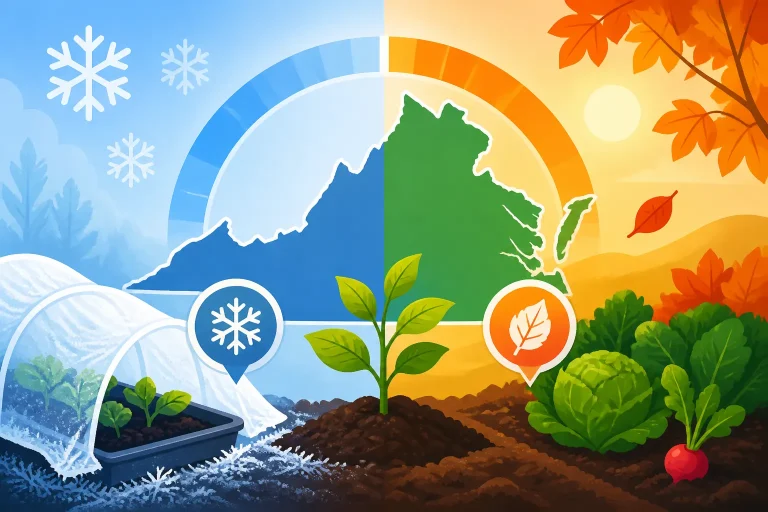
A season-extension cover can help with some conditions, but it does not change a crop’s basic needs or make every cold night harmless. See Fall Crop Planning: Adjusting Sowing Dates for Slow Autumn Growth and Extending Fall Harvest Windows Using Protective Fabric Covers for more detail on matching sowing and protection to fall conditions.
Why Virginia gardens in the same zone can have different windows
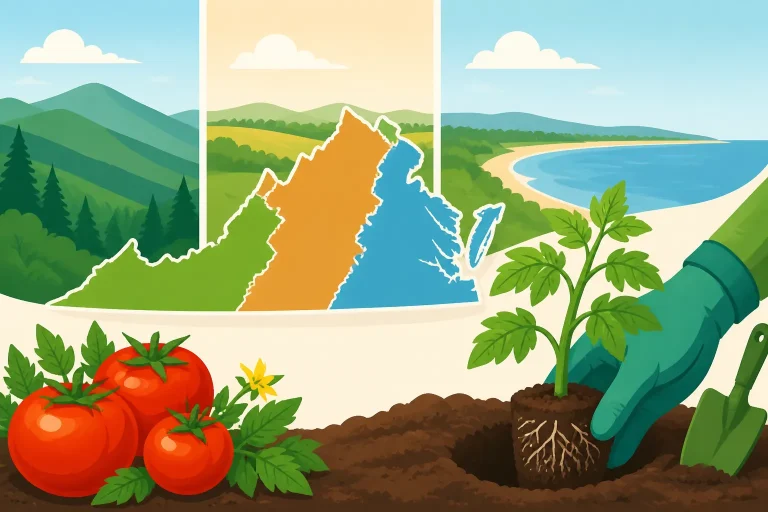
Hardiness zones describe a broad pattern of winter cold. They do not capture every factor that shapes a vegetable growing season. In Virginia, a gardener may be deciding among a mountain or valley site, a Piedmont yard, or a coastal area, and conditions can vary within those broad settings as well.
Elevation can affect when a garden warms and how exposed it is to cold. A low spot may collect cold air, while a slope can have different drainage and exposure. Buildings, pavement, walls, and nearby trees can alter the amount of sunlight and shelter a bed receives. Wind can dry a site and make young plants more vulnerable to stress. Soil texture and drainage also affect how quickly a bed becomes workable after wet weather.
These influences explain why two neighbors may have different experiences even if they use the same zone map. One may have a sunny, sheltered bed that warms early; another may garden in a shaded area where the soil remains cool and damp. Neither gardener should assume that a map alone settles the planting question.
Pay attention to the conditions where the crops will actually grow:
- Sun exposure: A bed with ample direct sun generally warms and dries differently from one shaded for much of the day.
- Air movement: An exposed site may lose heat and dry out faster than a protected space.
- Slope and low spots: Cold air can settle in low areas, so a frost-prone pocket may behave differently from nearby higher ground.
- Soil moisture and drainage: Wet, compacted soil can remain cold and may be damaged if worked while saturated.
- Nearby structures and paving: These can influence shelter and heat around a bed, but their effects are local and should be observed rather than assumed.
A simple garden record can improve your decisions over time. Note when soil becomes workable, when cool-season crops begin to grow steadily, how warm-season transplants respond, and where frost damage appears first. Record the conditions rather than treating a single successful planting date as a rule for every year.
For regional context, compare Vegetable Planting Dates: Coastal Plain, Piedmont, and Mountains with How Virginia Elevation and Microclimates Shift Frost Dates. If your garden sits in a sheltered or built-up area, Microclimates and Growing Windows Across Northern Virginia explains why conditions can differ between a neighborhood and a broader regional calendar.
Build a calendar that works with your zone
A reliable calendar is a sequence of decisions, not a list of dates copied from a map. The goal is to choose a planting window that fits the crop, the season, and the garden’s conditions. Here is a practical process.
- Look up the garden’s hardiness zone. Use the designated Virginia map as a regional reference. Keep in mind that the zone is not a forecast and does not specify a vegetable sowing date.
- Separate crops by season. Make a list of cool-season crops, warm-season crops, and crops intended for fall harvest. Do not group vegetables together just because they appear on the same seed order.
- Read the crop instructions. Check the seed packet or transplant label for germination needs, sowing conditions, days to maturity, and any guidance about starting indoors or planting outdoors.
- Check frost information for the relevant area. Treat spring and fall freeze dates as probabilities. They help assess risk, but a particular year can depart from the average.
- Assess the bed itself. Check whether the soil is workable and appropriate for the crop. Consider shade, drainage, wind, and whether the spot tends to frost earlier than nearby ground.
- Choose a window, then reassess. A planting window gives room to respond to weather. Before sowing or transplanting, check the short-range forecast and the condition of the soil.
- Keep notes. Record what was planted, where it was planted, the weather pattern, and how the crop established. Use those observations to refine future decisions.
For some crops, starting seeds indoors can extend the useful season or give seedlings a head start. But starting too early can produce crowded, overgrown seedlings before outdoor conditions are suitable. Direct sowing avoids indoor transplanting but depends more directly on outdoor soil and weather. Virginia Seed Starting: Direct Sowing vs Indoors and Indoor Seed Starting: How Early Is Too Early for Warm Crops? can help you choose between those approaches.
When using a printed or online calendar, check whether it is meant for a broad region, a particular crop, or a specific location. A regional calendar is a helpful planning tool, but it cannot know the shade, drainage, or cold-air pockets in an individual garden. If a calendar’s recommendation conflicts with your crop label or obvious local conditions, pause and investigate rather than planting by habit.
Succession planting also fits into this process. Instead of sowing an entire crop at once, some gardeners plant small batches at intervals so harvests are spread out. The useful interval depends on the crop, the season, and how quickly the plants mature. Follow the crop’s instructions and local recommendations rather than assuming one spacing pattern works for every vegetable. Planning Multi-Crop Successions Across Virginia Beds offers a way to plan those transitions.
Common zone-based planting mistakes
Treating the zone as a frost date
A hardiness zone does not tell you when spring frost risk ends or when fall frost risk begins. If you use it as a fixed frost calendar, you can expose tender crops to cold or delay crops that are suited to cooler conditions. Check frost information separately and read it as an estimate, not a promise.
Planting every vegetable on the same day
Vegetables have different temperature needs. Cool-season greens and peas do not follow the same logic as tomatoes or squash. A single planting date for every crop may put some seeds into unsuitable soil and leave other crops waiting unnecessarily. Sort crops by season and decide one group at a time.
Confusing a warm afternoon with warm soil
Air temperature can rise quickly during a sunny spell, while the soil remains cold. Seeds sown into chilly ground may germinate slowly or unevenly. Use soil readiness and crop-specific instructions as part of the decision, not the afternoon temperature alone.
Assuming a transplant is ready because it is available
A plant sold or grown indoors may not be prepared for direct exposure to sun, wind, and changing temperatures. Harden off transplants before placing them in the garden, and consider the forecast and soil conditions when deciding when to set them out.
Using a neighbor’s date without checking the site
A neighbor’s garden may have more sun, better drainage, or greater protection from wind. Their successful planting date can be a useful observation, but it is not a substitute for checking your own bed. Compare conditions before adopting someone else’s timing.
Treating a fall planting like a spring planting
Fall crops face declining day length and cooling temperatures as they grow. They may develop more slowly than expected, so maturity information needs to be considered alongside the likely period of suitable growing conditions. Build in flexibility and avoid assuming a crop will mature at the same pace it did in spring or summer.
Expecting covers to erase every risk
Row covers and other protective materials can help manage some weather stresses, but they are not a guarantee against all cold, wind, or temperature swings. Choose a cover suited to the crop and conditions, and follow product instructions where applicable. For practical details, see Using Row Covers for Light Frost Defense and Midday Heat Screening.
Frequently Asked Questions
Does my hardiness zone tell me when to plant vegetables?
No. It provides a broad picture of winter cold, while vegetable planting decisions also depend on frost risk, soil warmth, crop type, and the conditions at the garden site.
Should I plant according to my ZIP code?
A ZIP code can help you locate the general area on a hardiness map, but it does not describe every yard within that area. Check the map for the garden’s location and account for local exposure, elevation, and drainage.
Can I use one planting calendar for all of Virginia?
A regional calendar can be a helpful starting point, but Virginia’s growing conditions vary. Use a calendar suited to your region and compare it with local frost information, crop instructions, and the actual conditions in your garden.
If a warm spell arrives, is it safe to plant warm-season crops?
Not necessarily. A warm spell does not confirm that soil is warm enough or that cold weather has passed. Check the crop’s requirements, forecast conditions, and the garden’s soil before sowing or transplanting.
How can I improve my planting decisions from year to year?
Keep brief records of planting dates, bed conditions, weather, and crop performance. Over time, those notes can show how your particular site behaves and help you adjust a regional calendar to your garden.
Disclaimer
This article is for general informational purposes only and does not constitute professional advice. Laws, prices and regulations vary by location and change over time. Consult a qualified professional for guidance on your specific situation. Virginia Gardening Guide is not a government agency and is not affiliated with any university extension, state department of agriculture or other government agency.